
The final leg of the supply chain often consumes the largest portion of operational budgets, creating a persistent challenge for those directing daily business activities. This process needs to be well-orchestrated, well-funded, and tightly controlled to maintain profit margins. The complexities of urban and rural logistics can, however, be well addressed by custom AI solutions. It is the leading-edge data analytics and automation solutions that can help companies change the way parcels find their final destination.
This guide describes the main aspects of the last-mile problem, its effects on the manufacturing/logistics industries, and how the latest machine learning innovations can provide scalable, cost-effective solutions.
Understanding the Last-Mile Problem
The "last mile" is the final stage of the delivery process, during which a package is carried from a transportation hub or fulfillment center to a customer's doorstep. In fact, this portion could be as small as a few blocks in an urban area or as large as multiple miles in a rural area.
Historically, this stage has been the most costly and least efficient portion of the supply chain.
Last-mile delivery also stands in stark contrast to bulk shipping, where large quantities of goods are shipped to a single destination rather than multiple off-site locations (i.e., home addresses). This means that drivers routinely encounter unexpected traffic patterns, get specific addresses, and are delayed when customers are not home to accept deliveries. Those logistical challenges create a bottleneck in overall production output and delivery capability.
How Inefficiencies Affect Logistics Companies
For a VP of Operations, the last-mile problem directly threatens key success indicators. When this final segment is not optimized, the entire supply chain suffers. Here is how these inefficiencies impact logistics and manufacturing businesses:
- Eroded profit margins: The last mile can account for up to 50% of total shipping costs. Fuel expenses, vehicle wear and tear, and labor costs associated with extended routes severely undermine cost-reduction strategies.
- Wasted resource allocation: When drivers spend excess time navigating congested areas or attempting redeliveries, human resources are utilized inefficiently. This prevents companies from effectively scaling their operational models.
- Missed KPI targets: Delivery delays and high failure rates directly impact customer satisfaction metrics and operational efficiency targets. Without real-time insights, managers struggle to correct these issues proactively.
- Data silos and poor collaboration: Traditional dispatch systems often lack cross-department collaboration tools. When supply chain managers, warehouse operators, and drivers cannot share real-time data, communication breaks down, leading to operational errors.
5 Ways AI is Transforming Last-Mile Delivery Ops
AI allows operations executives to have real-time visibility into fleet performance, monitor mission-critical KPIs, and optimize cross-departmental collaboration.
Let us illustrate the top 5 best uses of last-mile delivery, based on real data and industry insights.
1. Intelligent Routing and Load Optimization
AI systems analyze static routes and continuously rewrite them based on real-time variables.
Dynamic Route Optimization
Static planning can't account for unexpected traffic congestion or extreme weather. Meanwhile, AI-based tracking continuously recalculates routes in real-time as traffic congestion develops, weather changes, or new orders come in. These algorithms compute the most efficient sequences based on historical data, weather, and local events. It results in dramatically lower delivery times, lower fuel consumption, and an optimized carbon footprint. For operations leaders, this translates directly to higher profit margins.
Smart Assignment of Drivers
Matching the right driver to the right delivery requires analyzing dozens of variables simultaneously. Last-mile AI solutions prioritize optimal assignments, considering driver location, vehicle capacity, delivery windows, and traffic conditions. For example, it uses historical data to determine how to best assign routes:
- Performance Record: The system analyzes each driver's delivery times, success rates, and efficiency.
- Specialized Skills: Drivers who can handle heavy packages or special equipment are matched to those deliveries.
- Local Knowledge: The algorithm takes into account a driver's experience in particular neighborhoods and sends them to the block where they know the hidden streets.
Examples: Bringg connects retailers to over 250 carriers across over 70 countries. Their AI considers the cost, speed, and reliability of each delivery service, then evaluates the delivery needs and matches them to the best carrier. Also, tools such as Elite EXTRA automate driver assignment via mobile applications, dynamically reassigning deliveries as drivers finish ahead of schedule. This smart matching results in higher fleet utilization and fewer empty miles, thereby increasing overall operational efficiency.
Load Optimization
AI doesn't just calculate volumes but also considers package dimensions, weight, delivery sequence, and vehicle capacity to provide best-fit loading solutions. Studies have found that load distribution optimization leads to lower fuel consumption and emissions and a reduced need for mid-route load rearranging.
Example: After importing route sets, OptimoRoute generates best-loading sequences. In an effort to maximize efficiency, the system loads the packages in reverse delivery order, subject to vehicle size constraints. Smart loading reduces handling time at each stop by up to 40%, enabling drivers to find packages right away.
2. Predictive Analytics for Demand and Operations
Predictive analytics allows organizations to allocate resources before demand actually hits.
Forecasting Delivery Volumes
AI-based demand forecasting enables manufacturers and retailers to prevent running out of stock or overstocking. It establishes restocking intervals by considering population size, purchasing power, and prior demand.
Example: Amazon uses AI software to predict where its packages will be delivered, even before customers place orders. The system analyzes browsing patterns to determine which inventory should be distributed to fulfillment centers nearest to potential buyers, which is expected to reduce delivery times by as much as 30%.
Ultra-Precise Delivery Time Forecasting
Traditional delivery timeframes are often several hours long, frustrating consumers and resulting in undeliverable packages. Machine learning applies big-data analysis to these windows to offer precise 30-minute time windows.
This prediction involves incorporating the history of deliveries, features of individual packages, and the local geography. The end result: fewer missed deliveries, as customers are more likely to be at home. It enables the operations group to forecast and schedule human and material resources down to very granular levels.
Examples: Domino's harnesses AI to calculate more precise delivery times based on real-time traffic, weather, and kitchen workload. DispatchTrack's ETA accuracy guarantee is 98% , based on factors such as location-specific conditions, including building access, parking availability, and prior delivery times. When consumers know precisely when packages will be delivered, they proactively set themselves up to receive them, reducing costly redelivery attempts and lowering the cost per delivery by as much as 25%, according to platforms like Routific.
Predictive Vehicle Maintenance
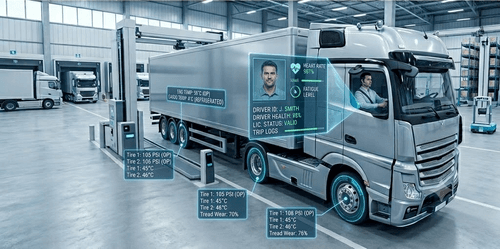
Fleet downtime is a major drain on operational revenue. Reports show that daily fleet downtime costs $480 to $760 per vehicle. AI-based predictive maintenance monitors telematics data, battery performance, and component behavior to predict potential problems in advance. Using data from onboard sensors, AI can detect early signs of mechanical failures, such as worn brakes or transmission issues. Such proactive intervention reduces service degradation, maintenance costs, and fleet size, while extending fleet lifetime.
Example: Tools like Project44 enable teams to proactively address issues and make repairs during warehouse hours. The system schedules preventive maintenance automatically when information indicates an imminent failure in tire condition, brake wear, or engine operation.
Anticipating Organizational Changes
Machine learning allows companies to predict major changes within their organizations and get out ahead of them. Sophisticated algorithms mimic what-if analyses, so they deliver strategic-level insights, such as:
- Volume fluctuations: The system forecasts seasonal or other temporary demand fluctuations so that managers can adjust resources in advance.
- Transition to electric fleets: Machine learning supports fleet electrification planning by evaluating routes, range limitations, and required charging infrastructure.
- Preparing for the peak season: Using simulations to model how to handle activity peaks, to provide the appropriate balance between resources and the workforce.
3. Autonomous and AI-driven Delivery Execution
Automating delivery workflows with autonomous technology is rapidly becoming a scalable operational model for large-scale logistics providers.
Robot and Drone Deliveries
Machine learning and computer vision enable drones and autonomous cars to sense and react to their surroundings. These systems are using AI for obstacle avoidance, high-precision positioning, and route planning. Although barriers still exist, unmanned vehicles can operate around the clock, deliver more quickly in high-traffic areas, and even go where traditional land vehicles cannot.
Example: Wing (Alphabet) has conducted more than 450,000 food and pharmaceutical deliveries in the US, Australia, and Finland. Their drones navigate city streets and lower packages on tethers. Also, Amazon Prime Air can deliver packages under 5 pounds in 30 minutes or less using MK30 drones equipped with the latest machine-learning advancements for obstacle avoidance. Work by Ansari has shown that AI-powered navigation, based on deep learning and computer vision, can significantly enhance delivery speed and accuracy compared to traditional ground-based approaches.
Parcel Shipping with Agentic AI
AI agents are making complex independent decisions throughout the delivery lifecycle. UPS's ORION (On-Road Integrated Optimization and Navigation) AI agent system determines the best routes for drivers to reduce fuel use and operational costs. Uber Freight automates the full orchestration cycle, tracking, payment, and procurement, by embedding more than 30 AI agents on its platform.
Orchestrating Mixed Fleets
Managing multiple delivery modes, from human drivers to robots and drones, demands AI capable of managing all of these elements simultaneously. This is a type of task scheduling in which jobs are scheduled based on their type, urgency, location, and resource availability.
Example: Locus offers end-to-end automation with live tracking across mixed fleets, specializing in large-scale retail and third-party logistics. Should the priority be a drone-delivery package or a human-delivery package, the functional AI makes that determination instantly, also taking travel times into account.
4. Smart Micro-Fulfillment Centers and Urban Hubs
Static warehouses are evolving into dynamic, responsive nodes that position inventory exactly where demand will emerge.
AI-Powered Urban Hubs
AI analyzes purchasing patterns, local events, and weather forecasts to estimate demand by block, then distributes products accordingly. It manages inventory across a network of micro-fulfillment centers. AI-optimized urban micro-hubs reduce last-mile delivery costs by 40% to 55% compared to conventional distribution approaches.
The reduction in delivery costs can also be achieved by relocating micro-hubs while minimizing urban space consumption. Smart hubs run 24/7, dynamically staffing, routing, and stocking in accordance with real-time conditions. That level of accuracy reduces waste associated with overstocking slow-moving products.
<diveInActionSection title="GoLocker" description="Mobile and full-stack development for innovators in the delivery services industry" buttonText="Dive in" buttonNavigationPath="/case-studies/golocker" imageUrl="https://files.impressit.io/golocker1_0f00effde1.png"/>
5. Advanced Address Validation and Location Intelligence
AI ensures every delivery starts with correct data.
Automatic Address Validation
Incorrect addresses lead to failed deliveries and wasted fuel. Meanwhile, AI systems analyze addresses in real time when orders are placed and compare inputs to updated geographic databases. The algorithms automatically correct spelling errors, fix incorrect postal codes, and standardize address formats according to local regulations. This AI process automation drastically reduces delivery failures, leading to immediate efficiency gains and cost savings.
AI-based Address Matching
Customers often describe locations differently from official postal records. AI bridges this gap by matching informal descriptions to verified addresses. The technology understands that "the blue house on Oak Street" might correspond to 123 Oak Street by cross-referencing landmarks and descriptive details. Machine learning continuously improves matching accuracy by translating alternative addressing schemes, such as GPS coordinates, into standard delivery instructions.
Strategic AI Implementation in Last-Mile Logistics
For operations leaders aiming to enhance efficiency and drive growth, implementing AI into last-mile logistics requires a calculated approach. Drawing on Impressit's extensive experience in developing automated solutions, we have outlined essential strategies. These are meant to help deploy AI where your company most needs it, ensuring you achieve cost savings and meet your key performance indicators (KPIs).
<callToActionSection title="ML and AI Software Development" description="Building custom AI- and ML-powered software solutions" buttonText="Contact us" buttonNavigationPath="/artificial-intelligence"/>
Target High-Impact Operational Inefficiencies
Rather than overhauling your entire system at once, direct your AI initiatives toward processes that currently create the most friction.
- Focus on specific metrics: Target areas such as failed deliveries, inaccurate estimated times of arrival (ETAs), or sub-optimal routing.
- Monitor success indicators: Track KPIs such as cost per delivery and on-time delivery rates to measure operational expense reductions and fulfillment success rates.
By concentrating on these areas, you can quickly boost operational efficiency and demonstrate a clear return on investment.
Ensure Data Integrity and Seamless Integration
The effectiveness of any AI system is directly tied to the quality of its input data.
- Standardize data flows: Maintain clean, consistent data across all operational sources, including your TMS, GPS devices, and customer databases.
- Monitor accuracy: Track data precision alongside delivery metrics to ensure your foundational information supports sound strategic decision-making.
Integration concerns often cause more delays than the technology itself, so ensuring your data infrastructure is robust is critical.
Select Scalable and Flexible Platforms
To support long-term strategic growth, invest in AI solutions that scale with your operations.
- Cloud-based infrastructure: Platforms like Microsoft Azure AI, AWS Machine Learning, and Google Vertex AI provide robust scalability without requiring massive upfront capital.
- Customizable frameworks: Open-source tools such as TensorFlow and PyTorch allow for specialized modifications.
Your chosen technology must adapt to volume fluctuations and new fulfillment models without requiring a complete system rebuild.
Differentiate Through Customer Experience
Leverage AI capabilities to build trust and separate your organization from competitors.
- Provide real-time insights: Offer accurate delivery windows and proactive delay notifications.
- Enable flexibility: Allow customers to autonomously adjust delivery schedules.
These automated features directly elevate customer satisfaction, as measured by NPS evaluations.
Empower Your Team with Technology Training
Technology only drives strategic growth when your personnel know how to use it.
- Train cross-departmental teams: Ensure dispatchers, drivers, and support staff understand how to interpret AI-generated recommendations.
- Combine human and machine intelligence: Encourage staff to manually adjust automated routes when necessary and feed real-world data back into the system to improve future accuracy.
Foster Continuous Improvement
AI requires ongoing feedback to function optimally. That is why you need to:
- Establish feedback loops: Systematically collect delivery outcomes, operational metrics, and user feedback.
- Refine algorithms: Use this compiled data to continually train your AI models, ensuring they become more accurate and efficient with every cycle.
Partner with Impressit for Custom Logistics Development
Even with a structured roadmap, off-the-shelf software often falls short of complex operational needs. Developing tailored logistics solutions allows you to streamline processes without relying on rigid, generic platforms.
Our custom development services provide targeted AI tools that address your unique logistical challenges. Whether you require a comprehensive routing system from the ground up or need to augment your existing setup, our team builds secure integrations connecting your TMS, Warehouse Management System (WMS), and customer interfaces into a single, unified workflow. We engineer customized machine learning models trained specifically on your delivery patterns and constraints, ensuring your infrastructure scales efficiently as your production output grows.
Ready to optimize your supply chain? Contact us to begin transforming your operational capabilities today.